From the Source, Part 1: What My Students Are Really Saying About AI
By: David - Principal, Researcher, and Co-Founder
As a principal, I spend a lot of time thinking about what school should be for students and what it should feel like to learn in a classroom. I’ve been thinking a lot about different ways to make sure our students know how to use AI.
Like many educators, I have read the articles, listened to the podcasts, followed the debates, and watched schools across the country try to figure out how to respond. There are conversations about policy, cheating, teacher preparation, ethics, and the future of learning. But the more I sit with all of it, the more I feel like there was one voice missing from too many of these conversations:
the students themselves.
So rather than continue reading about students, I decided to sit down and listen to them.
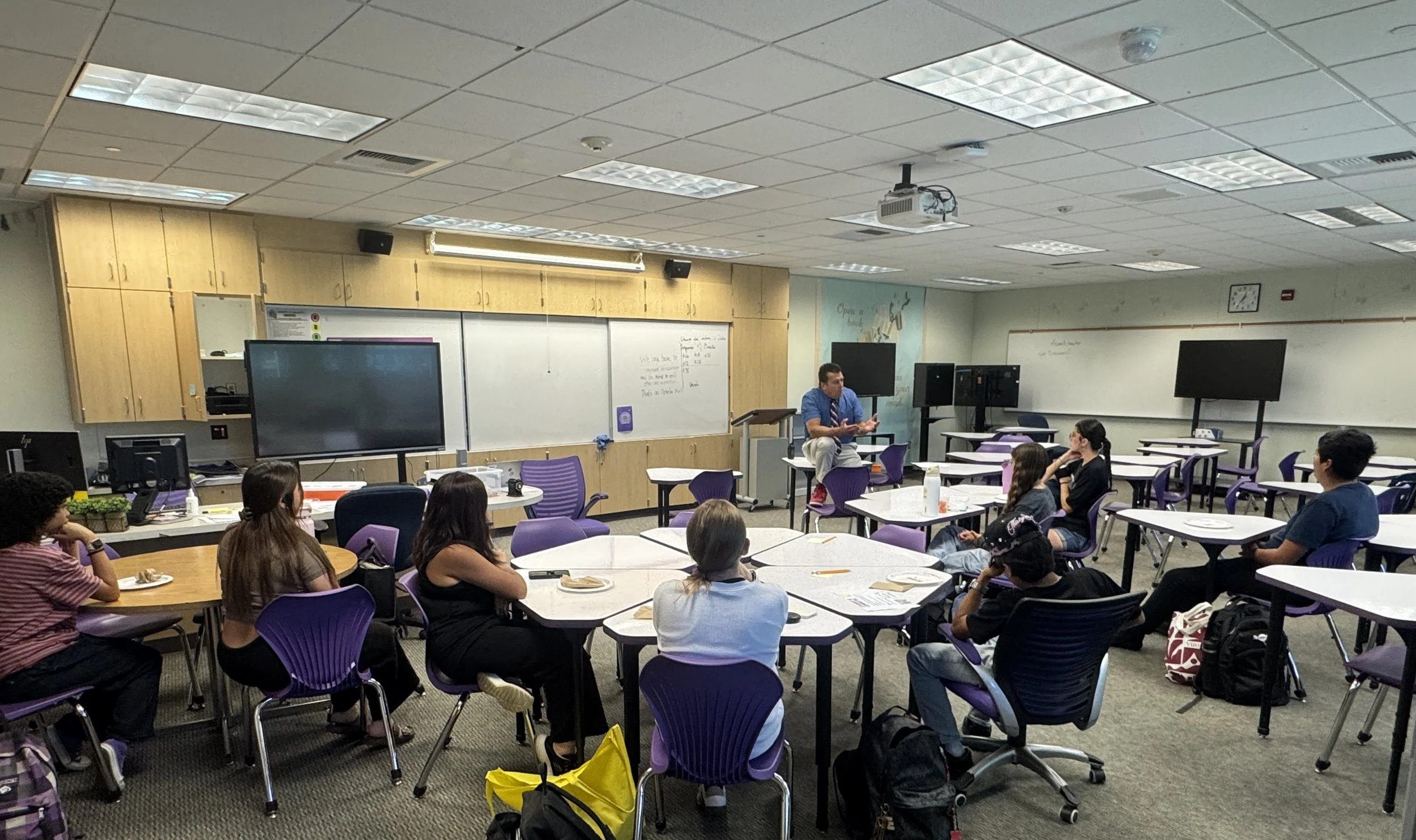
This week, I held the first conversation in a three-part student series on AI with a group of students from my school. My goal was not to lead them toward the “right” answer or confirm what adults already believe. My goal was to hear what is actually happening from the people living it every day.
I wanted honesty. I wanted the real story.
We intentionally brought together students with a range of experiences and perspectives. These were students who are high achieving, students who struggle, multilingual learners, students with IEPs and 504 plans, and students who use AI often, avoid it, or have seen it misused. If schools are going to make meaningful decisions about AI, then those decisions should be informed by the full range of student experience, not just the loudest or most convenient voices.
For this first meeting, I focused on one essential question:
What is actually happening?
I asked students to describe the last time they used AI for school, when they choose to use it, when they avoid it, and what they think teachers do not realize about student AI use.
What they shared was honest, thoughtful, and, at times, hard to hear.
Several students said they use AI when they do not understand what is being taught in class. One student described using it in math and chemistry because it breaks things down step by step and explains the reasoning in a way that makes more sense. Another shared that AI helped clarify what a teacher was looking for in an essay and made the expectations more visible. Others described using it for writing feedback, sentence starters, assignment direction, and review.
What struck me was that students were not mostly describing AI as a shortcut.
They were describing it as support.
Again and again, I heard versions of the same message: I use AI when I am confused. I use it when I am at home. I use it when there is a substitute. I use it when I need something explained differently. I use it when I am trying to learn.
One student called it “another teacher.”
That line has stayed with me.
Underneath that statement is something bigger, and more uncomfortable, that educators need to be willing to face: some students are relying on AI not because they are lazy, not because they are looking for an easy way out, but because they do not feel they are getting what they need from instruction.
That is not a headline I have seen often in the public conversation around AI in education. But it emerged quickly when students were simply given the chance to talk honestly.
And that is exactly why this matters.
One of the most powerful moments for me was realizing that after all the reading and listening I have done on this topic, I had rarely encountered people asking students the kinds of questions that would uncover this truth. So much of the adult conversation about AI begins with fear, policy, or control. But students led us somewhere deeper. They pointed us toward learning, frustration, clarity, confidence, and unmet needs.
That does not mean every student sees AI positively.
One student shared that she avoids using AI whenever possible because she does not fully trust it, worries about what it is doing more broadly, and prefers to rely on human-created sources. I appreciated that perspective because it reminded me that students are not thinking about AI in simplistic ways. Their views are layered. They are weighing usefulness against accuracy, convenience against independence, and support against overreliance.
That complexity is important.
Too often, schools respond to AI by rushing to create rules, train teachers, or react to misuse before taking the time to understand how students are actually experiencing it. I understand that instinct. School leaders have a responsibility to respond thoughtfully and responsibly. But I am increasingly convinced that we cannot lead well in this space if student voice is missing.
If we want thoughtful policy, meaningful instruction, and responsible use, we have to build from what is real. We have to begin with actual student behavior, actual student thinking, and actual student needs.
That is why I am doing this series.
This first meeting reminded me that listening to students is not a courtesy. It is a necessity. They are often naming things adults cannot see yet because adults are too far removed from the daily reality of being a learner in today’s classrooms.
What my students shared in this first conversation may already be pointing toward a question that deserves far more attention:
What does it mean when students turn to AI because they do not feel they are learning enough from us?
That is not an easy question. But it is the right one.
And I believe it is one worth staying with.
