iN THE CLASSROOM, IN THE WORK
By Amelia Hadley: AI Coach & Classroom Teacher
Lately, I’ve been thinking about something that feels increasingly rare in education consulting.
I’m still in the classroom.
Not “I used to teach.”
Not “I remember what it was like.”
Not “I visit campuses sometimes.”
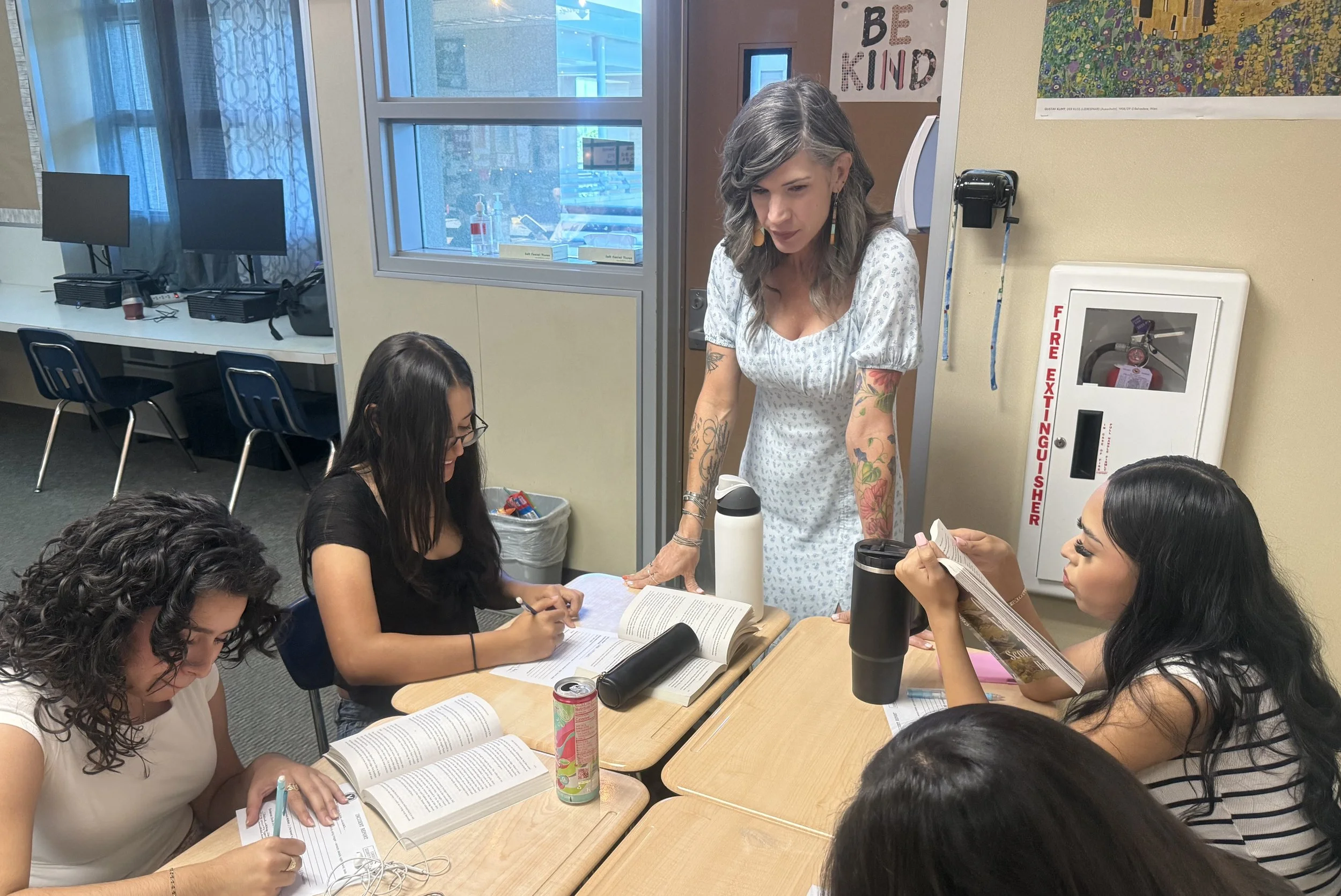
I teach English II. I co-teach English II. I teach AP Seminar. I teach Journalism. I serve as junior class advisor. I’m also our campus AI Coach.
I read student writing across ability levels, language backgrounds, and disciplines. I sit in IEP meetings. I collaborate in PLC. I leverage AI to design learning opportunities. I pivot when a lesson doesn’t land.
I am in it. Every day.
And lately, I’ve realized how much that matters.
The View from a Real Secondary Classroom
When you teach every day, you develop instructional clarity that doesn’t come from theory alone.
You know when a strategy sounds impressive in a workshop but falls apart when there’s not enough class time to make it work.
You know what happens when students haven’t done the reading.
You know how long transitions actually take.
You know the difference between engagement and compliance.
And you know the complexity of student writing.
I see multilingual learners navigating syntax while building arguments.
I see students with IEPs wrestling with organization and clarity.
I see high-performing students who can summarize beautifully but struggle to articulate original reasoning.
Writing instruction is not abstract for me.
It’s the work my students produce.
AI Integration - Not in Theory, But in Practice
Now layer AI into that same classroom.
As an AI Coach, I don’t get to talk about artificial intelligence as a concept. I see how students actually use it.
I’ve watched students use AI to brainstorm and deepen their thinking.
I’ve also watched students over-rely on it and disengage from the cognitive work.
I’ve redesigned assignments to require analysis instead of replication.
I’ve structured prompts so AI becomes a Socratic partner, not a replacement writer.
When you’re in the classroom every day, you see immediately whether AI strengthens thinking or weakens it.
There’s no room for vague integration plans.
It either works for students, or it doesn’t.
AI + The Four Pillars in Real Time
At 4 Pillars Learning Lab, we talk about integrating AI through:
Collaboration
Problem Solving
Critical Thinking
Communication
But for me, this isn’t theoretical.
Collaboration looks like students co-constructing prompts and refining AI output, together.
Problem Solving looks like students identifying weaknesses in an AI-generated response and revising for clarity and accuracy.
Critical Thinking looks like interrogating sources, questioning assumptions, and defending reasoning even when AI produces a polished answer.
Communication looks like students articulating how they used AI, why they revised it, and what they learned in the process.
AI does not replace the Four Pillars.
It amplifies them.
But only if the framework survives a real classroom.
The Leadership Perspective, Without Leaving Practice
Then there’s David.
As a principal, he sees the systemic side of instructional change: schedules, staffing, accountability, professional learning, campus culture.
He understands scale.
But he is not removed from instruction. He walks classrooms. He analyzes student work. He leads professional learning with full awareness of teacher workload and real constraints.
Between the two of us, we see education from multiple angles, classroom and campus-wide.
We are not disconnected observers.
We are practitioners.
Why Remaining Practitioners Matters
There is nothing wrong with those who have stepped out of the classroom. Many bring valuable expertise.
But remaining active practitioners shapes how we design support.
It keeps us honest.
When we talk about writing instruction, I’m thinking about grading load and feedback cycles.
When we discuss AI integration, I’m thinking about students still developing foundational literacy skills.
When we design frameworks around the Four Pillars, I’m thinking about what fits into a 50-minute class period with diverse learners.
Being in the classroom filters out what is impressive but impractical.
It demands alignment between what sounds good and what works.
The Daily Feedback Loop
This year alone, I’ve:
Redesigned lessons that flopped
Adjusted AI expectations mid-unit
Had direct conversations about academic integrity
Watched reluctant writers gain confidence with the right structure
Experienced days where nothing worked the way I planned
That daily feedback loop shapes everything I believe about instructional change.
Improvement is iterative.
Student growth is rarely linear.
Teachers are balancing more than anyone sees.
Any model worth sharing must withstand real students, real constraints, and real complexity.
Not Separate from the Work
When we speak about writing instruction, AI integration, leadership, or the Four Pillars, we are not speaking nostalgically.
We are speaking from yesterday’s class discussion.
From a PLC debate about grading.
From a student conference about revision.
From a campus conversation about responsible AI use.
We are not separate from the work.
And I believe that matters.
It keeps our thinking grounded.
It keeps our frameworks practical.
It keeps our leadership empathetic.
Most importantly, it keeps students at the center.
Because everything we build has to work for the students sitting in real desks, in real classrooms, right now.
And I get to sit with them every single day.
